An approach
shaped around
your platform
Every data platform has its own constraints — volume, team, budget, regulatory context. We design around those first, and the architecture follows.
Data engineering experts, end to end.
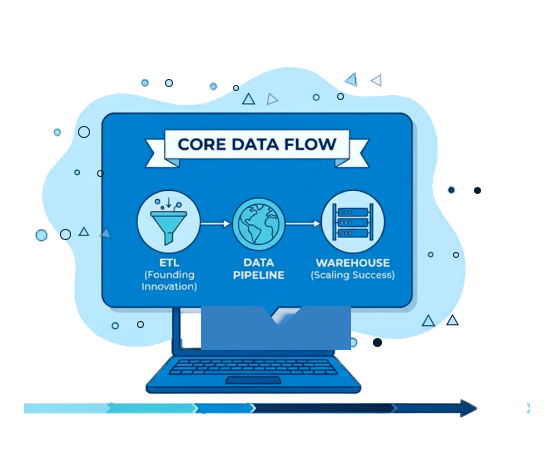
From ingestion pipelines and lakehouse architecture to BI dashboards, data science infrastructure, and AI-ready data platforms — we cover the full data stack. Whatever your use case, we build the foundation that makes it work in production.
We work with organizations of all sizes — from startups building their first data platform to enterprise teams modernizing complex existing systems. If data is a core part of your business, we can help you do more with it.
Architectures we build and optimize
Not every problem needs enterprise tooling. We design platforms that fit your data volume, team size, and budget — from managed cloud services to lean, open-source stacks. We'll tell you which approach fits. Not based on what generates the biggest license fee.
Our engineering approach
We have opinions about how data platforms should be built. They come from building them — not from reading about it.

Production-first
Every platform we build is designed to run in production from day one. Monitoring, alerting, documentation, and runbooks are not afterthoughts — they're part of the delivery.

Right-sized architecture
We design the smallest system that meets the requirement. Adding complexity is easy. Removing it later is expensive. We start lean and scale when the data justifies it.

Cost-aware by default
Databricks spend, cluster sizing, storage layout — cost control is part of every architectural decision, not a separate optimization project six months later.

Built for handover
We build platforms your team can own and extend after we leave. That means standards, conventions, documented decisions, and no magic. If your engineers can't understand it, we haven't done our job.
Who we typically work with
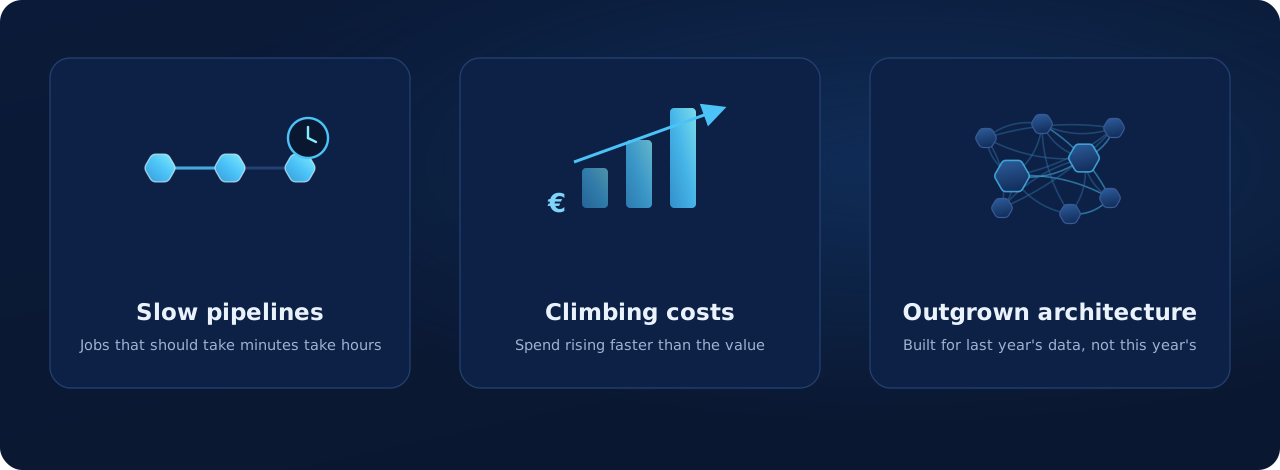
Our clients are organizations that already have data — often a lot of it — but their platform isn't keeping up. Pipelines are slow, costs are climbing, or the architecture has grown past what anyone originally planned for.
Sometimes they're starting fresh and want to avoid the mistakes they've seen elsewhere. Sometimes they're inheriting a platform built by a previous team or vendor and need someone to take an honest look at it. In both cases, they want engineers — not account managers — and they want a clear plan, not a slideshow.